Source Autumn And Winter Tweed Headband for Outdoor, Sport, Daily Use
Source 30 autumn and winter tweed headband options for outdoor, sport, and daily use. Compare standard sizes, plain patterns, and customization services from China suppliers to find the right fit for your needs; compare the available evidence and request quotations based on your requirements.
Key considerations
Products List







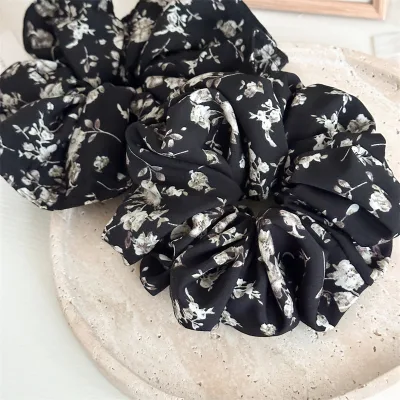

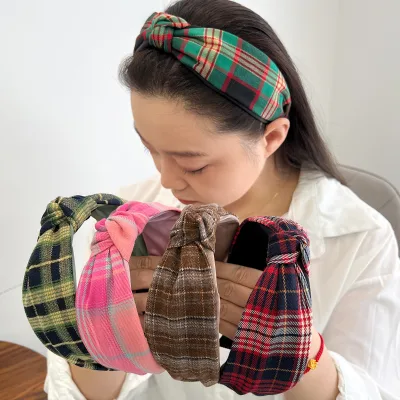
Comprehensive Sourcing Guide
Autumn and Winter Tweed Headband Sourcing Guide
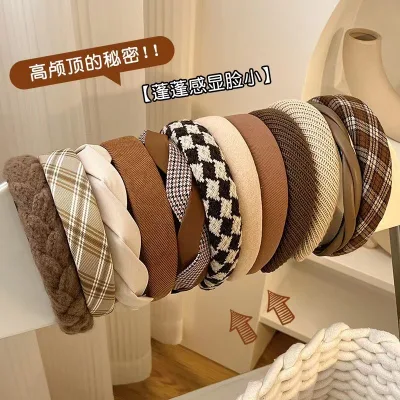
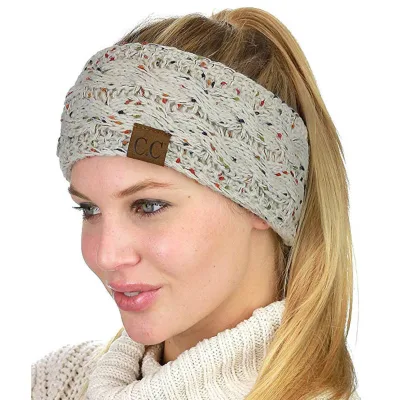
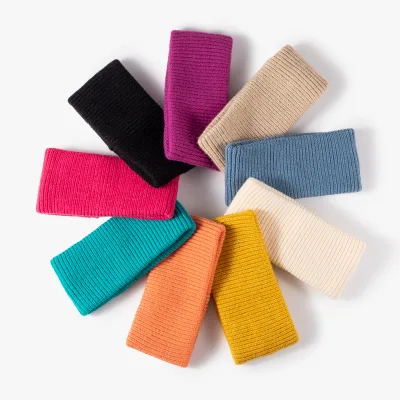
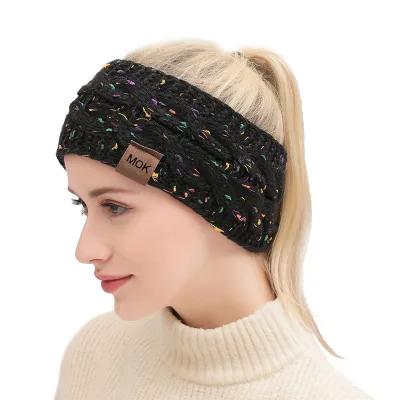
The autumn and winter tweed headband market presents a diverse range of options, though current listings reveal a significant variance in material composition and style definitions. While the core keyword suggests a specific fabric texture, observed product attributes indicate that many available items are categorized simply as "Other" materials or generic blends like polyester and spandex rather than traditional wool tweed. Buyers must carefully distinguish between marketing terms and actual fabric content, as the observed data includes items described as "Plain," "Solid Color," and "European and American Style" alongside specific model numbers like DL-WB-15 and hb009.
Procurement decisions should prioritize verifying the actual textile composition against the seasonal requirement for warmth and durability. The observed listings show a mix of usage scenarios ranging from "Outdoor" and "Sport" to "Home and Outdoor" and "Daily Use," suggesting that the term "tweed" may be applied loosely to various knit or woven headbands suitable for cooler weather. Sourcing strategies must account for this ambiguity by requesting physical samples to confirm the texture and weight, ensuring the product meets the functional expectations of an autumn and winter accessory rather than a generic summer sports band.
Product Scope and Observed Listing Signals
Current market signals indicate a broad spectrum of headband types available under the general category of seasonal accessories, with specific attributes like "Spring / Autumn" seasonality and "Unisex" or "Women" suitability. The observed product range includes models with dimensions such as 18x6CM, 22cm x 9cm, and 17x19cm, alongside a "Standard Size" option, reflecting the lack of a single uniform specification for this product type. Buyers should note that while some listings explicitly mention "Tweed" in the search context, the detailed attributes often list materials as "Other" or generic blends, requiring a deeper investigation into the specific weave and fiber content.
Commercial listings also reveal significant variation in customization capabilities and packaging standards, which directly impacts the final product presentation and logistics. Some suppliers offer "Customized" sizes and logos, while others provide standard packaging like "1PC/OPP Bag" or "50PCS/ Polybag," and a few include "Hangtag" or "Carton" options. The presence of "Machine Made" techniques and "Non-Remy Hair" attributes in some listings suggests a potential overlap with hair accessory categories, necessitating clear communication to ensure the ordered item is a textile headband and not a hair extension product.
Technical Specifications to Verify
Verifying the physical dimensions and structural integrity of the headband is critical, as observed specifications vary widely from 17cm to 22cm in length and 6cm to 19cm in width. Buyers must confirm the exact "prod_standard" or size requirements, as some listings specify "About 22 cm * 9 cm" while others list "18x6CM" or "17x19cm," and the "Diameter" is noted as D17 Cm for certain circular styles. Since the "Single gross weight" is recorded as 0.075 kg for some items, but others list a weight of 52g, understanding the mass and density of the material is essential for shipping cost calculations and ensuring the product feels substantial enough for winter use.
Material composition and construction techniques require rigorous validation to ensure the product aligns with the "tweed" expectation and seasonal performance needs. Although some attributes list "Cotton, Polyester, Spandex" or "100% Cotton/Polyester,Sp," the general material category is often marked as "Other," which obscures the specific blend ratio and weave tightness. Buyers should request detailed fabric swatches to verify the "Machine Made" quality and ensure the elasticity provided by spandex is sufficient for a secure fit without causing discomfort, particularly given the "Sport" and "Outdoor" usage claims found in the data.
Compliance and Safety Documentation
Safety and compliance documentation for textile headbands should focus on chemical safety and fiber content accuracy, as the observed data does not explicitly confirm specific certification statuses like Oeko-Tex. While the keyword implies a textile product, the "Low-confidence background" regarding Oeko-Tex means buyers cannot assume this standard is met without direct verification from the supplier. Procurement teams must request test reports for formaldehyde, pH levels, and azo dyes to ensure the product is safe for skin contact, especially since the items are intended for "Daily Use" and "Outdoor" activities where prolonged wear is expected.
Labeling and origin transparency are equally important for regulatory compliance, particularly given the diverse origins listed, including "Guangdong, China" and "Shanghai." Buyers should verify that the "prod_origin" and "Place of Origin" match the documentation provided for customs clearance and that the "Brand Name" is correctly declared as "other" or the specific client brand if private labeling is involved. Ensuring that the "Customized" features, such as logos or specific packaging, comply with the destination market's labeling laws is a necessary step to avoid potential regulatory hurdles or product seizures at the border.
Cost Drivers and Commercial Terms
The cost structure for these headbands is influenced by the complexity of the material blend, the customization level, and the specific packaging requirements observed in the listings. Prices in the market range from 0.18 to 2.9 USD, a wide spread that likely reflects differences in material quality, such as the distinction between generic "Other" materials and higher-grade cotton or polyester blends. Buyers should analyze whether the lower price points correspond to basic "Plain" or "Solid Color" items with standard packaging, while higher prices may be associated with "Customized" sizes, "With Logo" features, or more complex "European and American Style" designs.
Minimum Order Quantities (MOQ) and lead times are significant commercial variables, with observed MOQs ranging from 1 to 3000 units depending on the supplier and customization needs. The "Selling Units" are listed as "Single item" for some, while others specify "50PCS/ Polybag" or "50PCS/Carton," which affects how the MOQ is calculated and fulfilled. Suppliers offering "mould making and sample making service" may have different pricing structures for initial development compared to standard stock items, and buyers must clarify if the "Tba" (To Be Advised) quantity per carton impacts the total order volume and shipping efficiency.
Supplier Qualification and Quality Control
Supplier qualification should prioritize manufacturers who demonstrate flexibility in customization and have a proven track record of meeting specific size and material requirements. The observed data shows suppliers offering "Customized" sizes and "Customized" packing, indicating a capacity for tailored production, but buyers must verify the consistency of these services across different batches. It is essential to assess the supplier's ability to maintain the "Standard Size" or specific dimensions like "18x6CM" consistently, as variations in production can lead to fit issues that compromise the product's utility for "Sport" or "Outdoor" applications.
Quality control protocols must address the potential discrepancies between the "tweed" keyword and the actual "Other" material classification found in many listings. Buyers should implement a rigorous sampling process to check for defects in the "Machine Made" construction and ensure the "Elements" like "Solid Color" are uniform without bleeding or fading. Given the "Feature" attributes such as "Eco-Friendly" or "Luminous" mentioned in some listings, verifying these specific claims through physical testing is crucial to ensure the product delivers on its promised functionality and does not rely on unverified marketing terms.
Long-Term Procurement Checks
Establishing a long-term procurement strategy requires regular audits of the supplier's ability to maintain consistent material quality and dimensional accuracy over time. Since the observed product attributes include a wide range of models like "hb002," "hb007," and "LB50021," buyers should ensure that the supplier can replicate the exact specifications of the initial successful order without deviation. This consistency is vital for maintaining brand reputation, especially when the product is marketed for "Daily Use" or "Outdoor" activities where durability and comfort are paramount.
Continuous monitoring of market trends and supplier capabilities is necessary to adapt to changing consumer preferences and seasonal demands. The "Season" attribute of "Spring / Autumn" suggests a cyclical demand pattern, and buyers should verify that the supplier can scale production up or down efficiently to meet these fluctuations. Additionally, keeping abreast of any changes in "prod_standard" or material availability will help mitigate supply chain risks, ensuring that the "Autumn and Winter" collection remains competitive and aligned with the evolving expectations of the B2B market.
FAQs
What customization options are available for autumn and winter tweed headbands?
Customization is available for these headbands, allowing buyers to request specific designs or branding. Suppliers offer mould making and sample making services to ensure the final product meets exact requirements. This flexibility supports unique branding needs for retail or promotional use.
Can I source autumn and winter tweed headbands with specific packaging requirements?
Yes, packaging can be customized to suit your logistics needs. Standard options include individual OPP bags or polybags, with bulk quantities packed in cartons. Some suppliers also offer hangtag packaging for retail display. You can specify carton quantities or custom branding on the outer packaging.
What are the typical specifications for autumn and winter tweed headbands?
Specifications vary by model, with standard sizes ranging from approximately 17x19cm to 22x9cm. Some models feature a diameter of 17cm. The headbands are generally long and designed for adult unisex use. Materials often include cotton, polyester, or spandex blends for comfort and durability.
Are autumn and winter tweed headbands suitable for outdoor sports activities?
Yes, many models are designed for outdoor and sports usage. They feature a sport style and are suitable for spring and autumn seasons. The headbands help keep hair in place during physical activities. Their durable construction makes them practical for both daily use and active outdoor scenarios.
What is the minimum order quantity for autumn and winter tweed headbands?
The minimum order quantity ranges from 1 to 3000 pieces, depending on the supplier and customization level. Standard items may have lower MOQs, while customized orders with specific logos or packaging might require higher volumes. Buyers should check individual supplier listings for precise MOQ requirements.
Where are autumn and winter tweed headbands typically manufactured?
These headbands are primarily manufactured in China, with significant production in Guangdong and Shanghai regions. Suppliers in these areas offer extensive manufacturing capabilities and supply chain efficiency. Buyers can source directly from these locations to benefit from established production networks and competitive pricing structures.